Icons
The word icon is of Greek origin and means: image, likeness.
Primarily, portable images of the saints of the Eastern churches, the Orthodox and Greek Catholic churches, the Virgin Mary and Christ were depicted. These liturgical images were seen as material imbued with divine grace. Emphasizing this, different, very valuable materials are used as a carrier surface, such as ivory, metal, enamel, mosaic, and later on, in order to make it available as widely as possible, it was also painted on furniture boards and wooden boards. In everyday life, we can mostly meet this form. These images are usually consecrated. They play an important role in the spirituality of the churches, and their goal is to raise awareness of the reverence for God and his saints, strengthening the relationship between the icon and the person praying before it, which, figuratively speaking, connects God and the believer as a kind of bridge. It may also be interesting to note that the churches do not consider these holy images to be either decorations or works of art. You can see a wide selection of icons from the second half of the 19th and first half of the 20th century in person in our store, or you can buy them conveniently and safely from our online store in just a few minutes!
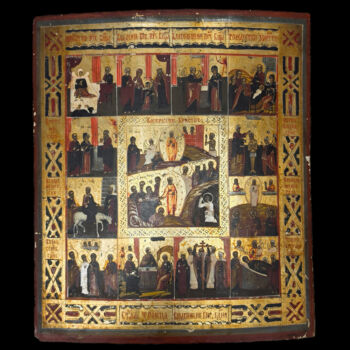
Ünnepi ikon jelenetekkel Krisztus életéből
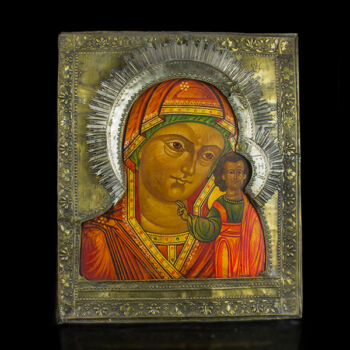
Our Lady of Kazan, Theotokos, Mother of God of Kazan icon with brass oklad
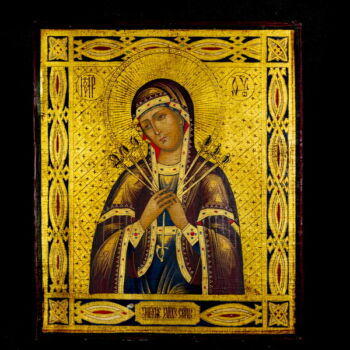
Icon: Our Lady of Swords
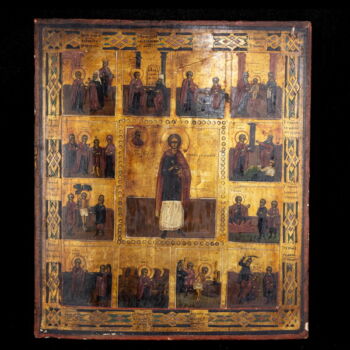
ICON: Festive icon with 12+1 scenes
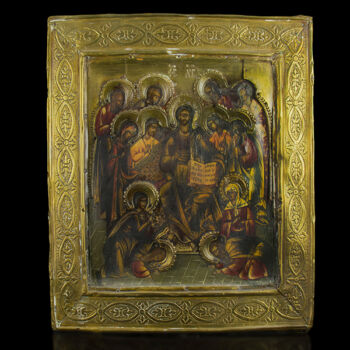
Jesus with the Disciples icon
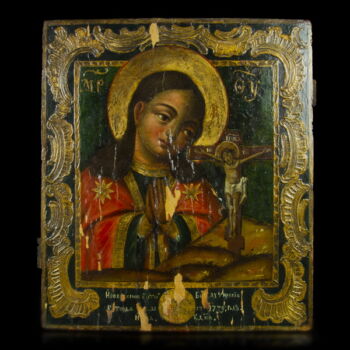
Icon depicting Achtirka Mother of God
Icon, with the image of the Mother of God of Achtirka, oil paint painted on a wooden panel, in some places the paint has peeled off and bulged.
XIX-XXth century, dimensions: 31.5 X 27.5 cm
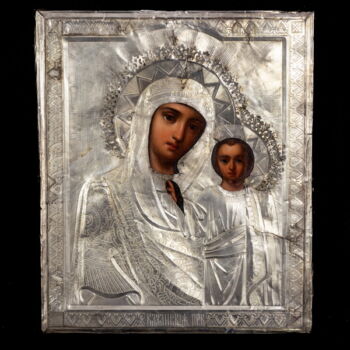
ICON: Our Lady of Kazan
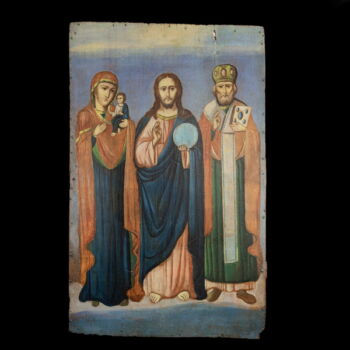
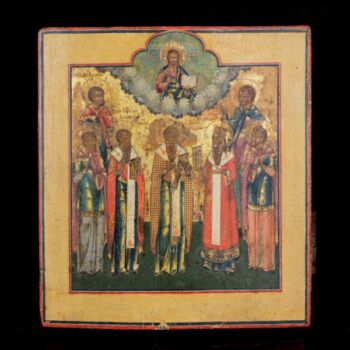
Icon: The chosen saints (Christ, Mary, Saint Nicholas)
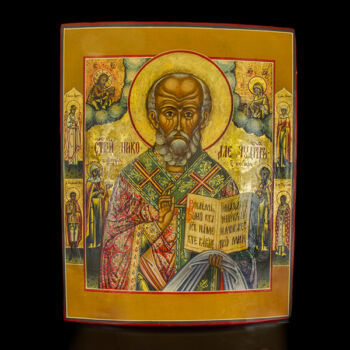
St. Nicholas with saints icon
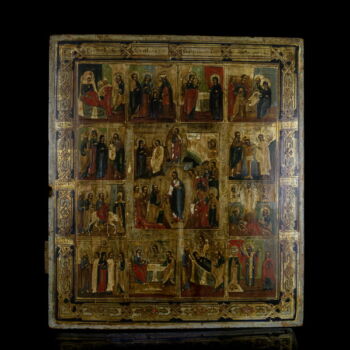
Icon of feasts with 12+1 scenes
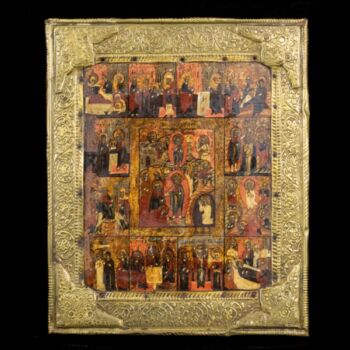
Festive icon with copper oklad