The history of silver is intertwined with that of gold:
Silver was already known in ancient times, and its shine made it popular, so besides gold, silver was just as popular a material for jewelry. Because of its softness, it was very easy to stretch, thin, and work, but it was easy to wear out as well. Therefore, it was usually alloyed with copper to make it more resistant. In ancient times, not only coins, but even mirrors were made from it. When only the elemental form was known for its production, the value of silver was considered equivalent to gold. The two noble precious metals were also alloyed with each other, and electrum was born from this. Today, however, the difference between their values is well understood and clear. The reason for this is that compared to gold, silver is more common in nature and can also be extracted from various chemical compounds, so its value gradually began to decrease over time. In ancient times, silver came from India, Persia, and Spain. In the Middle Ages, silver mines were opened in large numbers in Saxony and Tyrol. With the discovery of the new continent, America, silver also came to Europe from there.
We offer a wide selection of antique and modern silver artifacts, which you can view in person in our store, or buy them conveniently and safely from our online store, even in a few minutes!
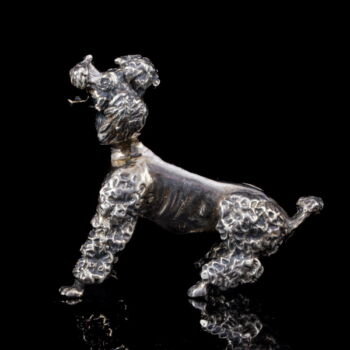
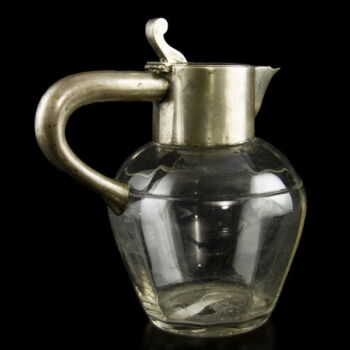
800-as finomságú ezüst, Nettó tömege: 77 gramm; Méretei: 9,5 x 5 x 8 cm. Jelzett: hasa alján beütött „Cerreril”valamint 1934-44 közötti olasz (Arezzo) fémjellel.
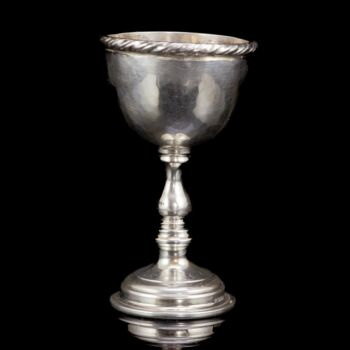
800 fine silver. Net weight: 96.3 grams. Dimensions: 9 x d:5cm. Round stemmed glass with a three-piece punched chalice. Marked: Italian hallmark from between 1944-68, Rotelli maker's mark.
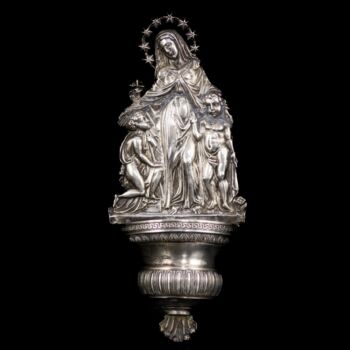
Préselt, olasz antik ezüst szenteltvíztartó Szűzanya, Jézus és Keresztelő Szt. János alakjaival. Nettó tömege:53 gramm; Méretei: 19,5 x 8 x 3,5 cm. Jelzett: 1810-72 között használt antik olasz fémjellel.
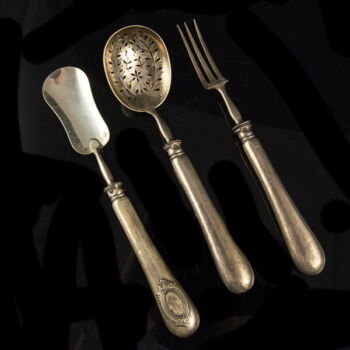
925 fine silver 126 grams; length: 19 cm. On the handle there is a coat of arms decorated with acanthus leaves, and an engraved monogram in the mirror. Marked: French hallmark used since 1872. From around 1900-1920.
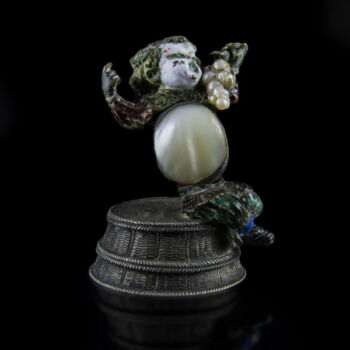
Antique silver enamel-decorated Bacchus figurine: antique silver Bacchus figurine sitting on a barrel-shaped base, its dress has carved, guilloche enamel adornments. In one hand he is holding a bunch of grapes of tiny pearls. The trunk of the body is a ball-shaped white mother of pearl, on its back there is porcelain, decorated with gold sheets. Vienna, end of XIXth century. Not classified signs.
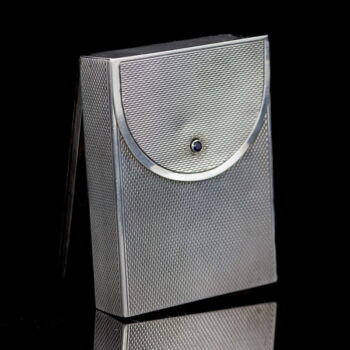
800-as finomságú ezüstből készült, zsanérosan záródó, dupla fedelű, téglatest formájú cigaretta szelence. Külső felülete gilosált díszítéssel. Egyik fedelének zárógombjában 1 kisebb, kerekre csiszolt sötétkék zafír kővel Cca. 0,10 ct. Nettó tömege: 97 gramm; Méretei: 7,5 x 5,5 x 1,5 cm. Jelzett: 1968-tól használt olasz fémjellel, valamint 2016-tól használt magyar fémjellel egyaránt.
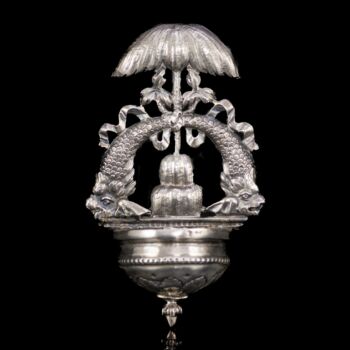
Préselt, olasz antik ezüst szenteltvíztartó delfines szökőkút díszítéssel. Nettó tömege: 63,8gramm; Méretei: 16,5 x 10 x 3,5 cm. Jelzett: 1810-72 között használt antik olasz fémjellel.
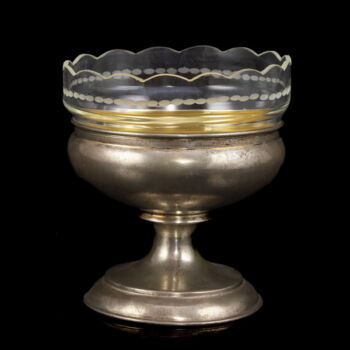
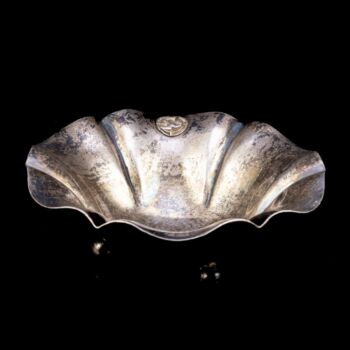
800-as finomságú ezüst,3 golyó lábra helyezett kerek formájú, karéjos kínálótállal. Nettó tömege: 75 gramm. Méretei: 4,5 x d:13,5 cm. Jelzett: Pest, 1937-66 között használt fémjellel.