The history of silver is intertwined with that of gold:
Silver was already known in ancient times, and its shine made it popular, so besides gold, silver was just as popular a material for jewelry. Because of its softness, it was very easy to stretch, thin, and work, but it was easy to wear out as well. Therefore, it was usually alloyed with copper to make it more resistant. In ancient times, not only coins, but even mirrors were made from it. When only the elemental form was known for its production, the value of silver was considered equivalent to gold. The two noble precious metals were also alloyed with each other, and electrum was born from this. Today, however, the difference between their values is well understood and clear. The reason for this is that compared to gold, silver is more common in nature and can also be extracted from various chemical compounds, so its value gradually began to decrease over time. In ancient times, silver came from India, Persia, and Spain. In the Middle Ages, silver mines were opened in large numbers in Saxony and Tyrol. With the discovery of the new continent, America, silver also came to Europe from there.
We offer a wide selection of antique and modern silver artifacts, which you can view in person in our store, or buy them conveniently and safely from our online store, even in a few minutes!
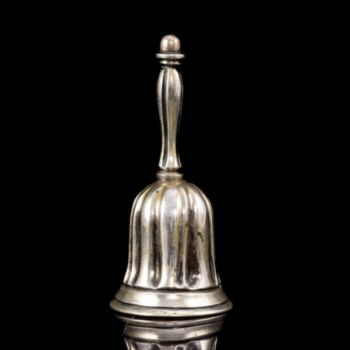
800-as finomságú, öntött ezüst kis csengő, Nettó tömege: 143,30 gramm; méretei: 10,5 x d:4,5 cm. Jelzett: 800-as finomságjelzéssel. Európa, XX. század első fele- közepe.
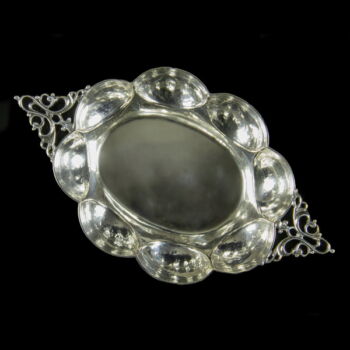
German silver wine tasting bowl with handles: boat-shaped silver bowl with a mantle divided into 8 parts, and inwrought handles resembling tendrils. Elaborated with a punching technique out of a silver plate of 800 in silver fineness. 193 gr, 4,5 x 13 x 23 cm. Signed: German crown and crescent moon hallmark used from 1886. Germany, end of XIXth century.
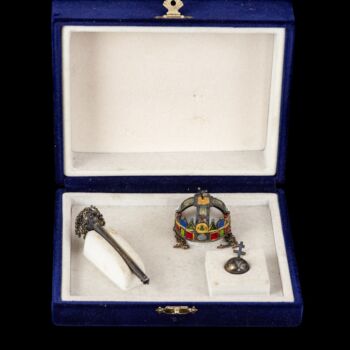
925-ös finomságú aranyozott ezüst, 3 darab: szent korona, jogar, országalma, Nettó tömege: 43gramm. Szent korona szines zománcozással. Jelzett: 1999-2006 közötti magyar fémjellel. Eredeti dobozával.
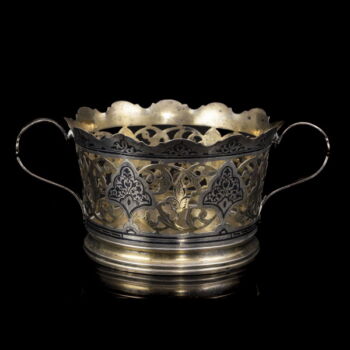
875-ös finomságú, szovjet ezüst kétfüles kínáló tál áttört, vésett, niellós díszítésű palásttal, aranyozott részletekkel. Nettó tömege: 193 gramm. Méretei: 8 x 19 x 12,5 cm. Jelzett: 875-ös finomság-szerinti szovjet fémjellel és 1966-99 közötti behozatalijellel.
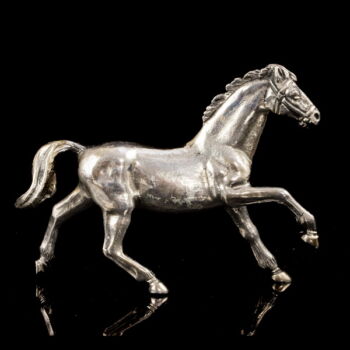
800-as finomságú ezüst ló figura, Nettó tömege: 149,16 gramm; Méretei: 7 x 3 x 10 cm. Olaszország, XX. század második fele. Jelzett: 2016-tól használt magyar fémjellel.
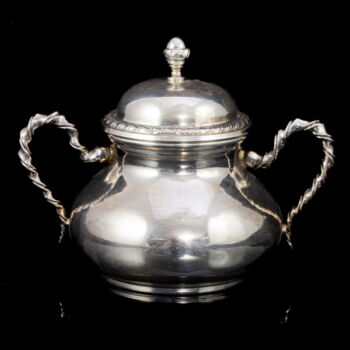
Ezüst cukortartó doboz két csavart díszítésű füllel, levehető fedéllel. Nettó: 200.5 gramm. Jelzett: 1944-1968 között használt olasz (PI, Pisa), 800%. ezrelékes ezüst fémjellel. Mérete: 10.5 x 14 x 9.5 cm.
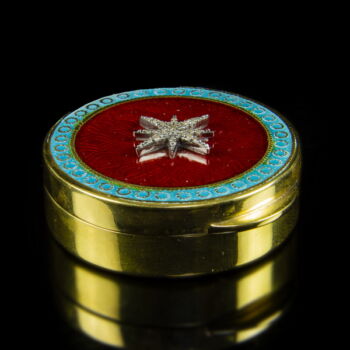
88 Zolotnyik gilded silver box, 1.5 x d: 4 cm; 30 grams. Its hinged lid is covered with turquoise enamel and reddish brown luster enamel with eight-pointed stars of diamonds in the middle. Marked: 20th century 88 Zolotnyik silver hallmark.
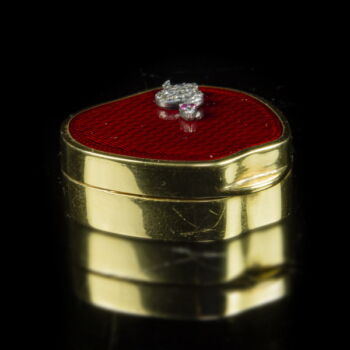
Apple-shaped, 88 Zolotnyik gilded silver medicine box. Snake appliqué with red luster enamel cover and achtkant-cut diamonds (23 pieces, approx. 0, 115 ct) and rubies (2 pieces of Cca. 0.01 ct) on the hinged lid. 23.87 grams; 12 x 32 x 47 mm.
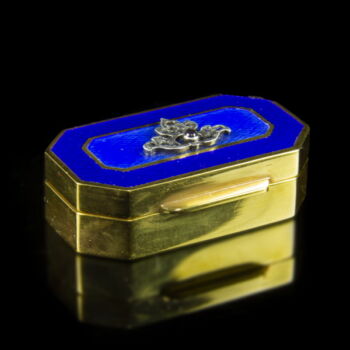
88 Zolotnyik gilded silver rectangular box with cut corners. Hinged lid with diamonds and 1 small ruby. Its cover is covered with cobalt blue and sky blue luster enamel. 10 x 25 x 40 mm; 35.85 grams. Marked: XX. century Russian 88 Zolotnyik fineness hallmark.
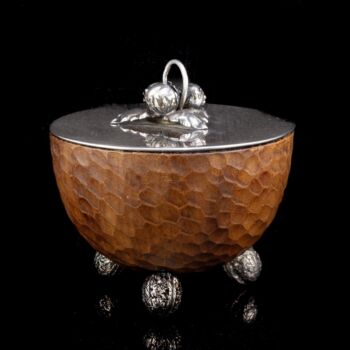
Félgömb alakú, csonthéjas termést formázó, esztergált, faragott fa kínálótálka, 3 plasztikusan megformált ezüst dió lábon, valamint három mogyorót leveleivel megformáló füllel ellátott ezüst fedéllel. 800-as finomságú ezüst, Nettó tömege: 278 gramm. Méretei: 15 x d:15 cm. Jelzett: 1888-tól használt német hold-koronás fémjellel.
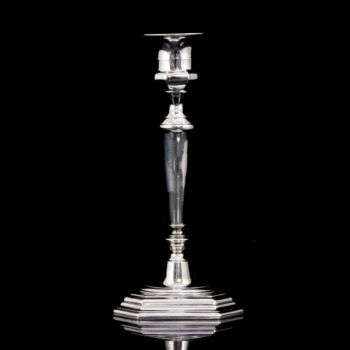
Nyolcszögletű talpról felhúzott kisebb asztali gyertyatartó, 800-as finomságú ezüstből, Nettó tömege: 232,5 gramm; Méretei: 19,5 x 9,3 x 9,3 cm. Jelzett: 1968-tól használt (Padova) olasz fémjellel.