The history of silver is intertwined with that of gold:
Silver was already known in ancient times, and its shine made it popular, so besides gold, silver was just as popular a material for jewelry. Because of its softness, it was very easy to stretch, thin, and work, but it was easy to wear out as well. Therefore, it was usually alloyed with copper to make it more resistant. In ancient times, not only coins, but even mirrors were made from it. When only the elemental form was known for its production, the value of silver was considered equivalent to gold. The two noble precious metals were also alloyed with each other, and electrum was born from this. Today, however, the difference between their values is well understood and clear. The reason for this is that compared to gold, silver is more common in nature and can also be extracted from various chemical compounds, so its value gradually began to decrease over time. In ancient times, silver came from India, Persia, and Spain. In the Middle Ages, silver mines were opened in large numbers in Saxony and Tyrol. With the discovery of the new continent, America, silver also came to Europe from there.
We offer a wide selection of antique and modern silver artifacts, which you can view in person in our store, or buy them conveniently and safely from our online store, even in a few minutes!
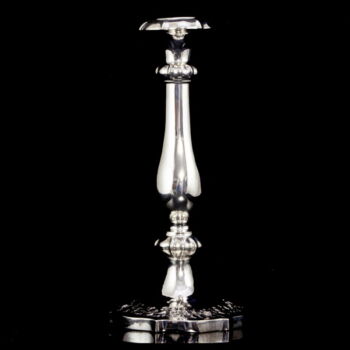
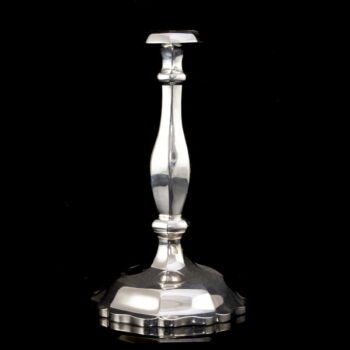
Kézzel trébelt kerek talpról felhúzott, 13 latos antik ezüst gyertyatartó, nódusszal tagolt szárral. Nettó tömege: 228 gramm. Méretei: 24,5 x d:11,5 cm. Jelzett: 1847-es antik bécsi fémjellel.
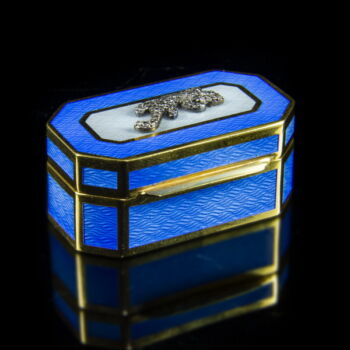
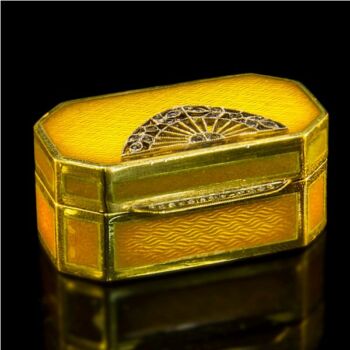
88 Zolotnyik gilded silver rectangular box with cut corners. Salamander inlaid with diamonds on the hinged lid. Cover and side panels covered with blue luster enamel. 20 x 25 x 40 mm; 41.48 grams. Marked: XX. century Russian 88 Zolotnyik fineness hallmark.
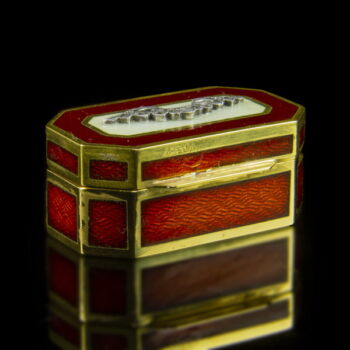
88 Zolotnyik gilded silver rectangular box with cut corners. Wing-like decoration with diamonds on the hinged lid. The top and sides are covered with red luster enamel. 20 x 25 x 40 mm; 36.05 grams. Marked: XX. century Russian, with 88 Zolotnyik fineness hallmark.
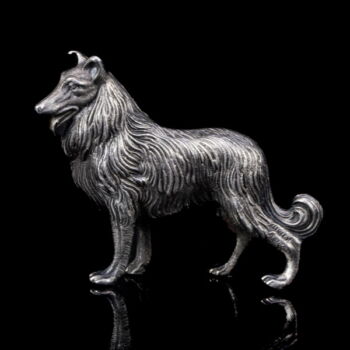
800-as finomságú ezüstből készült mini ezüst skótjuhász figura. Nettó tömege: 162,4 gramm; MéreteI: 6 x 6,5 x 1,8 cm. Jelzett: 1944-68között használt olasz (Firenze) fémjellel, valamint 2016-tól használt magyar fémjellel egyaránt.
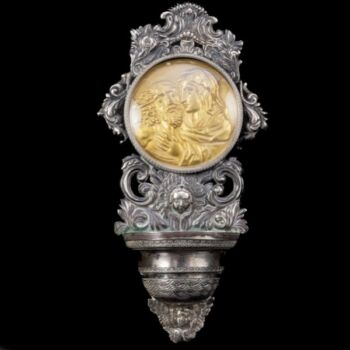
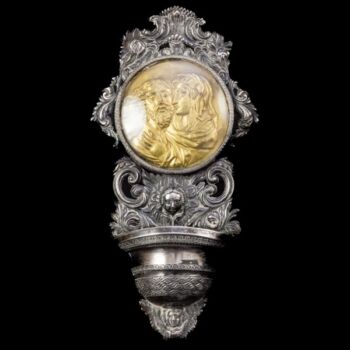
Pressed, patinated silver wall-mounted holy water container with acanthus leaf and angel frame, with a medallion made of gilded copper under glass, decorated with pressed portraits of Christ and Mary. Gross weight: 98.8 grams. Dimensions: 21 x 11 x 3.5 cm. Marked: antique Italian hallmark between 1810-1872.
Préselt, patinázott ezüst fali szenteltvíztartó akantusz levél és angyal ábrázolású kerettel, benne üveg alatt aranyozott vörösrézből készült, préselt Krisztus és Mária arcképével díszített medalionnal. Bruttó tömege: 98,8 gramm. Méretei: 21 x 11 x 3,5 cm. Jelzett: 1810-1872 közötti antik olasz fémjellel.
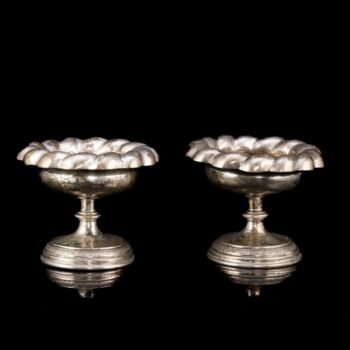
13 latos antik ezüst fűszertartó pár, Nettó tömege: 242 gramm. Méretei:7,5 x d:9,5 cm. Kerek talpról fehúzott, díszítőgyűrűvel tagolt, rövid szár, rajta karéjos peremmel készült fűszertartó kehellyel. Jelzett: Bécs, 1837 fémjellel. Feloldatlan mesterjeggyel.
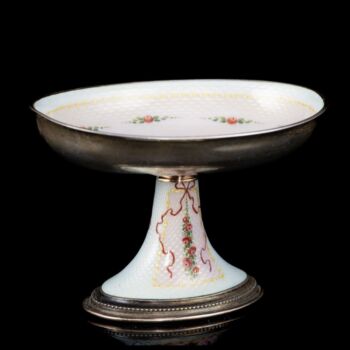
14 karátos rozé aranylemezzel és 925-ös finomságú ezüstből készült kis ékszertartó tálka. Ovális formájú talpról felhúzott, ovál forma kistálka, tükrében transzparens fehér és rózsaszín lüszterzománcozás, tükrében festett virágkosár díszítéssel. Bruttó tömege: 133,2 gramm. Méretei: 6,5 x 9,5 x 7 cm. Jelzett: 1867-1872 között használt bécsi fémjellel. Restaurálás nyomaival.
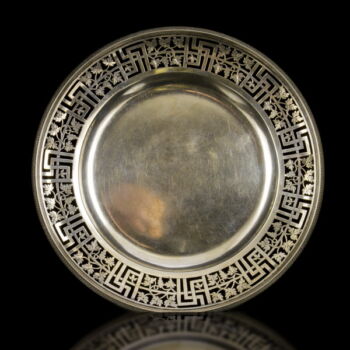
Viennese antique silver decorative plate with a pattern of grape leaves and bunch of grapes pierced at the edge. Marked: 1821 Viennese 13 lats antique silver hallmark. Net: 276 grams. Diameter: 21 cm.